

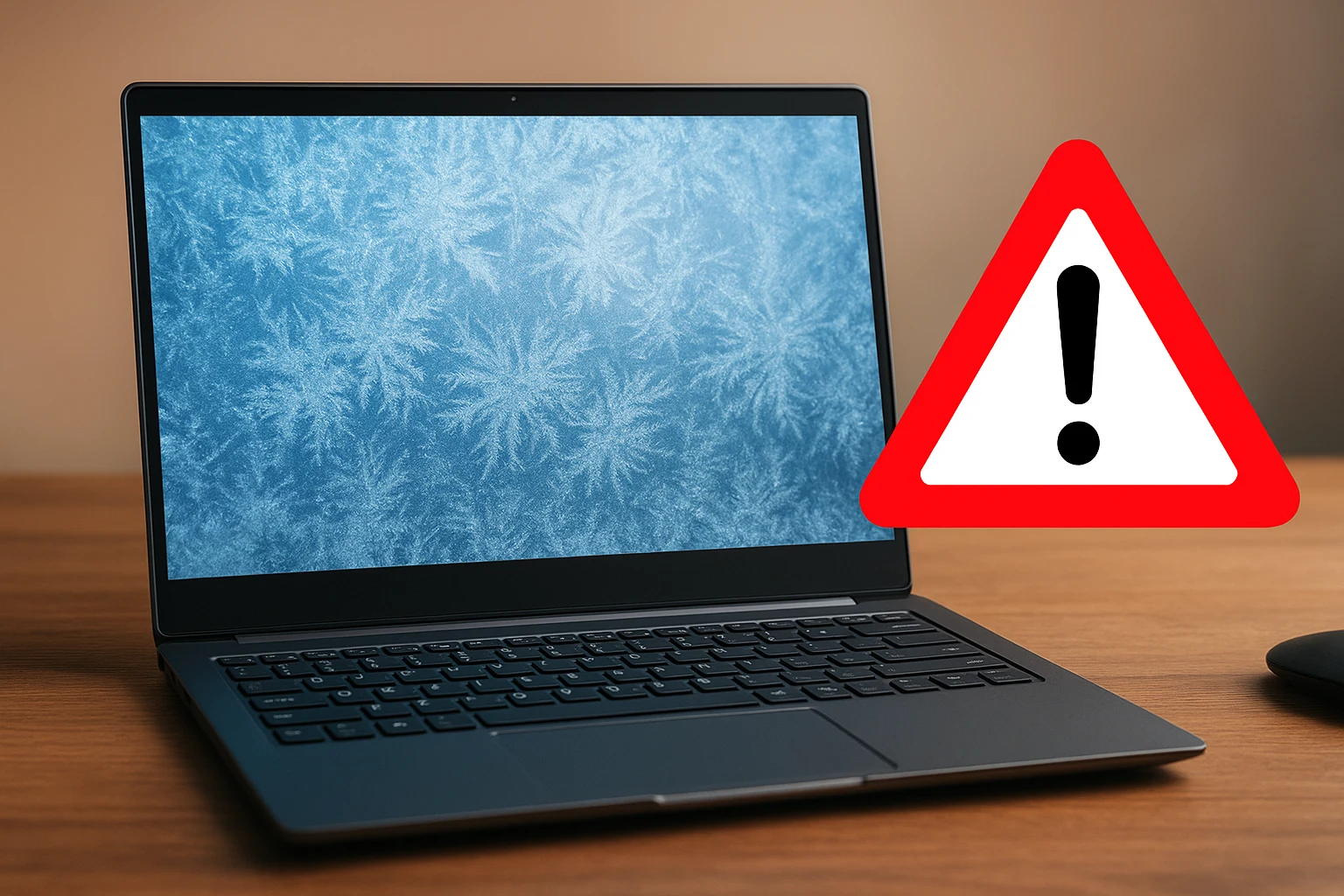
Struggling with a frozen laptop in Dubai’s fast-paced environment? Whether you’re using a Lenovo Yoga, Dell XPS, or ASUS ZenBook, a frozen screen can halt your productivity. Knowing how to fix a frozen laptop is essential for professionals in A frozen laptop can bring your work to a standstill in seconds. One moment you’re editing a document or joining a meeting, and the next your cursor won’t move, apps stop responding, and nothing seems to work.
The good news is that most laptop freezing issues are fixable.
Whether you use a Lenovo Yoga, Dell XPS, or ASUS ZenBook, this guide explains how to unfreeze your laptop, identify the underlying cause, and prevent the problem from happening again.
What Does It Mean When a Laptop Freezes?
A laptop freeze occurs when the operating system stops responding. Common symptoms include:
- Cursor not moving
- Keyboard shortcuts not working
- Apps stuck on “Not Responding”
- Black or frozen screen
- Spinning loading icon that never ends
- Loud fan noise followed by slowdown
Sometimes the issue is temporary. In other cases, repeated freezing points to overheating, storage issues, RAM shortages, malware, or failing hardware.
Quick Fixes to Unfreeze Your Laptop
1. Wait a Few Minutes
Large updates, video rendering, and heavy multitasking can temporarily overload your system.
If the hard drive light is active, give the laptop two to five minutes to recover.
2. Press Ctrl + Alt + Delete
This opens the security screen.
If it appears:
- Click Task Manager.
- Select the unresponsive program.
- Click End Task.
This is one of the fastest ways to fix a frozen Windows laptop.
3. Restart Windows Explorer
If only the taskbar or desktop is frozen:
- Open Task Manager.
- Select Windows Explorer.
- Click Restart.
4. Force Restart the Laptop
If nothing responds:
- Hold the power button for 10–15 seconds.
- Wait 30 seconds.
- Turn the laptop back on.
You may lose unsaved work, but this usually restores normal operation.
Why Your Laptop Keeps Freezing
Understanding the cause helps you fix the problem permanently.
Overheating
Heat is one of the most common reasons laptops freeze.
Causes include:
- Dust-clogged fans
- Dried thermal paste
- Blocked air vents
- Faulty cooling fans
Thin laptops such as the Dell XPS and ASUS ZenBook are particularly sensitive to heat buildup.
Low RAM
Running many browser tabs, design apps, or video editing software can exhaust available memory.
Failing SSD or Hard Drive
A damaged storage drive often causes:
- Slow boot times
- Frequent freezing
- Blue screen errors
- Missing files
Malware and Viruses
Malicious software can overload CPU and RAM resources.
Outdated Drivers
Graphics, chipset, and BIOS issues can trigger random freezes.
Corrupted System Files
Unexpected shutdowns and failed updates may damage Windows files.
How to Check What Caused the Freeze
Use Task Manager
Press Ctrl + Shift + Esc and review:
- CPU usage
- Memory usage
- Disk usage
Consistently high usage can identify the bottleneck.
Check Reliability Monitor
Search for Reliability Monitor in Windows to view crash history and recurring errors.
Run a Storage Check
Open Command Prompt and run:
chkdsk /fScan for Malware
Use Windows Security or trusted antivirus software.
Model-Specific Tips
Lenovo Yoga Freezing Issues
Lenovo Yoga laptops may freeze because of touchscreen driver conflicts or hinge mode detection.
Try:
- Updating drivers with Lenovo Vantage
- Disabling touchscreen temporarily
- Updating BIOS
Dell XPS Freezing Problems
Dell XPS laptops often freeze under heavy workloads or due to thermal throttling.
Try:
- Running Dell SupportAssist
- Cleaning internal fans
- Updating BIOS and graphics drivers
ASUS ZenBook Freezing Issues
ZenBooks may freeze because of aggressive power settings or background software.
Try:
- Switching to Balanced mode
- Updating MyASUS utilities
- Removing unnecessary startup apps
Advanced Fixes for Persistent Freezing
Update Windows and Drivers
Install all pending updates.
Free Up Disk Space
Keep at least 15–20% of storage free.
Run System File Checker
sfc /scannowTest RAM
Use Windows Memory Diagnostic.
Reset Windows
If corruption persists, use Reset this PC after backing up your data.
How to Prevent Laptop Freezes
A few habits can dramatically improve laptop stability.
Keep Your Laptop Cool
Use it on a hard surface and clean vents regularly.
Upgrade to an SSD
If your laptop still uses an HDD, upgrading to an SSD delivers a major performance boost.
Add More RAM
8 GB is the minimum for comfortable multitasking. Heavy users often benefit from 16 GB or more.
Remove Unnecessary Startup Apps
Fewer startup programs mean faster, more stable performance.
Install Updates Regularly
Driver and security updates often resolve freezing issues.
Warning Signs of Hardware Failure
Seek professional diagnostics if you notice:
- Freezes becoming more frequent
- Blue screen errors
- Clicking noises from storage drives
- Random shutdowns
- Burning smell
- Battery swelling
When Professional Repair Makes Sense
DIY troubleshooting works for many software-related issues. However, if your laptop still freezes after updates and resets, the underlying problem may involve:
- Faulty RAM
- SSD failure
- Motherboard issues
- Overheating due to fan failure
- Power circuit problems
If you need expert help, Milaaj provides reliable laptop diagnostics and repair services across Dubai.
Final Thoughts
A frozen laptop is frustrating, but it usually has a clear cause. In many cases, a force restart, driver update, malware scan, or storage cleanup solves the issue.
If your Lenovo Yoga, Dell XPS, or ASUS ZenBook continues to freeze, a hardware issue may be developing. Addressing it early can prevent more expensive repairs later. If you are worried about losing important files our secure data recovery services in Dubai can help recover documents, photos, and business data.
Planning to upgrade? Sell your old laptop in Dubai for quick cash and a hassle-free trade-in process.
Frequently Asked Questions
Why does my laptop freeze randomly?
Common causes include overheating, low RAM, malware, failing SSDs, and outdated drivers.
How do I unfreeze a laptop without turning it off?
Press Ctrl + Alt + Delete and use Task Manager to close the unresponsive app.
Can overheating cause a laptop to freeze?
Yes. Excessive heat often triggers freezing and automatic shutdowns.
Will adding RAM stop my laptop from freezing?
If memory usage is the cause, a RAM upgrade can significantly improve stability.
Is a frozen laptop a sign of a bad SSD?
It can be. Storage failure often causes freezing, slow boot times, and file corruption.
How often should I service my laptop?
For heavy users, internal cleaning and maintenance once a year is a good practice.



Leave a Reply