

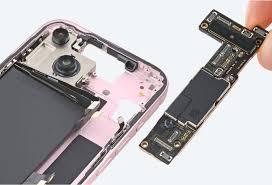
When you unbox a brand-new iPhone 17 or its predecessors, you are holding one of the most sophisticated pieces of engineering on the planet. Underneath that stunning Tandem OLED display and the Grade 5 Titanium frame lies the heart of the machine: the logic board. In 2026, these motherboards have shrunk to incredible sizes while housing the powerful A19 Pro chip and high-speed 2nm architecture. However, the smaller and more integrated these components become, the more susceptible they are to specific hardware failures. If your device has suddenly gone black or is acting erratically, you might be facing Common Motherboard Issues in New iPhone Models.
Understanding these issues is the first step toward a solution. Unlike a broken screen or a degraded battery, motherboard problems are “invisible.” They often manifest as software glitches, overheating, or a total lack of power. Because everything from your Face ID sensors to your 5G modem is soldered onto this single piece of silicon and copper, a tiny fault can have a massive ripple effect. This guide explores the technical challenges of modern iPhone boards and how professional intervention can save a device that others might call “unfixable.”
The Shift to 2nm Architecture: Why Modern Boards are Delicate
In 2026, Apple’s transition to 2nm architecture has allowed for unprecedented speed and battery efficiency. However, this advancement comes with a trade-off in physical resilience. The “traces” (the microscopic copper paths that carry electricity) on an iPhone 17 logic board are now so thin that even a minor amount of heat or a small drop can cause them to fracture.
1. The Interposer Sandwich Design for Common iPhone Motherboard Issues
Since the iPhone X, Apple has used a “sandwich” motherboard design where two boards are stacked on top of each other and connected by hundreds of tiny solder balls called an interposer. While this saves space for the larger Silicon-Anode batteries, it creates a point of failure. A heavy drop can “delaminate” these layers, causing the phone to lose Wi-Fi, cellular signal, or touch functionality even if the exterior glass remains perfectly intact.
2. Thermal Stress on the A19 Pro Chip for Common iPhone Motherboard Issues
The A19 Pro chip is a powerhouse, but it generates concentrated heat. Despite Apple’s advanced vapor chamber cooling, long gaming sessions in the Dubai heat can lead to “thermal expansion.” Over time, this expansion and contraction can weaken the solder joints underneath the CPU, leading to the dreaded “Boot Loop” where the phone restarts endlessly at the Apple logo.
Common Motherboard Issues in New iPhone Models
If your phone is acting up, it usually falls into one of these three categories of motherboard failure. Identifying these early can prevent a total data loss.
Sudden Death (No Power)
This is the most alarming issue. You leave your phone charging at night in Al Barsha, and in the morning, it won’t turn on. This is often caused by a “short circuit” on the main power rail (VCC_MAIN). A single failed capacitor, no larger than a grain of sand, can pull the entire voltage to the ground, preventing the A19 chip from receiving power.
Audio IC and Tristar Failures
Are you unable to record voice memos? Does your caller say they can’t hear you? This often indicates a failure in the Audio Codec chip or the “Tristar” (charging logic) IC. These chips manage the complex handshake between your lightning/USB-C port and the rest of the board. Using low-quality third-party chargers is the #1 cause of these specific Common Motherboard Issues in New iPhone Models.
Baseband and Signal Dropping
If your iPhone 17 shows “Searching” or “No Service” even with a valid SIM card, the Baseband processor the brain of your cellular connection—might have lost contact with the motherboard. Because this chip is uniquely “paired” to your CPU, you cannot simply swap it out; it must be re-soldered (reballed) to restore the connection.
How Professional Micro-Soldering Saves Your Phone
When a motherboard fails, most “big box” retail stores will simply tell you that you need a full replacement. This is expensive and results in the loss of all your data. Professional micro-soldering is a different approach that targets the specific failed component.
Step 1: Thermal Imaging Diagnostics for Common iPhone Motherboard Issues
Technicians use thermal cameras to see where heat is concentrating on the board. A shorted component will glow bright white under the camera, allowing the repair team to find the “needle in the haystack” without guessing.
Step 2: The Reballing Process for Common iPhone Motherboard Issues
If the issue is the “sandwich” delamination, the technician must “split” the two halves of the motherboard using a precision heating station. They then clean off the old solder, apply new high-quality leaded solder balls, and “re-marry” the boards. This is one of the most difficult repairs in the industry and requires a steady hand and a high-powered microscope.
Step 3: IC Replacement for Common iPhone Motherboard Issues
Using a hot-air rework station, technicians can remove a single faulty chip like the Power Management IC (PMIC) and replace it with a new one. This restores the board to factory-spec power flow without affecting your data or your Face ID security.
Milaaj Mobile and Laptop Repair Al Barsha: Your Logic Board Specialists
When your high-tech device fails, you need more than just a “parts changer.” You need a team of engineers who understand the electrical schematics of the latest Apple hardware. Milaaj mobile and laptop repair Al Barsha is the premier destination for complex motherboard restoration in Dubai. We specialize in the repairs that others say are impossible.
Why Milaaj is the Trusted Hub for Motherboard Repair:
- Expertise in 2nm Architecture: Our technicians are trained specifically on the iPhone 17 and M-series architectures. We understand the delicate heat tolerances required to work on the A19 Pro logic boards without damaging the surrounding sensors.
- Low Price for High-End Repairs: A full motherboard replacement can cost 60% of the price of a new phone. We offer a low price by repairing the existing board, often saving our clients thousands of Dirhams while preserving their data.
- Speed Repairing for Urgent Cases: We know your phone is your life. While motherboard work is delicate, our speed repairing focus ensures that most logic board diagnostics are completed within 24 hours, with repairs following shortly after.
- Ultimate Convenience in Dubai: Located in the heart of Al Barsha, we are the central hub for local residents. If you can’t come to us, take advantage of our iPhone pickup and delivery service. We’ll collect your dead device and bring it back to life in our specialized lab.
- Unmatched Part Quality: When we replace a chip, we use only Original-grade ICs. We ensure that your phone’s efficiency, IP68 water resistance, and signal strength are restored to factory standards.
FAQs: Common iPhone Motherboard Issues
1. Can a dropped iPhone cause motherboard damage without breaking the screen?
Yes! As mentioned earlier, the “sandwich” design of the motherboard is sensitive to shock. A hard drop can cause the internal solder joints to crack even if your Ceramic Shield 2 glass remains perfect.
2. Is water damage on the motherboard fixable?
In many cases, yes. The key is to act fast. Saltwater or chlorine causes rapid corrosion. At Milaaj, we use ultrasonic cleaning to remove the minerals before they “eat” through the copper traces of the board.
3. Will I lose my data if the motherboard is repaired?
One of the main benefits of motherboard repair at Milaaj is that we keep your original storage chip (NAND) intact. In 95% of cases, your photos, contacts, and messages remain exactly where they were.
4. Why does my iPhone 17 get extremely hot while charging?
If it’s getting “too hot to touch,” you might have a failing charging IC or a “leaky” capacitor on the motherboard. This is a fire hazard and should be diagnosed immediately by a professional.
5. Can you fix an iPhone that won’t turn on after a software update?
If the update “bricked” the phone, it might be a software issue, but it could also be a hardware component that failed during the high-stress update process. We can perform a “force-flash” or hardware diagnostic to find out.
Summary: Common iPhone Motherboard Issues
The Common iPhone Motherboard Issues are complex, but they are a solvable challenge in the hands of the right experts. Whether it’s a failed power rail, a baseband error, or a drop-related delamination, your iPhone 17 doesn’t have to end up in a recycling bin. By choosing micro-soldering over a full device replacement, you save money, protect the environment, and most importantly keep your digital life intact.
Dubai is a city built on the cutting edge of technology, and your repair service should be no different. If your flagship phone has gone silent, remember that the problem is usually just a few microns wide.
Is your iPhone acting like it’s reached the end of the road? Don’t settle for a “replace only” verdict. Contact Milaaj today for a professional logic board diagnostic and let us bring your device back to life with precision and care!
Other Services:
- Need other iPhone repairs? Check out Milaaj’s iPhone repair services in Dubai.
- Looking to upgrade? Learn about selling your used iPhone in Dubai.
- Data loss concerns? Visit Milaaj’s data recovery services.
- For Apple users, check Apple trade-in options in Dubai.
📍 Visit Any Milaaj Branch in Dubai
🔹 Bur Dubai
Milaaj Mobile and Laptop Repair Dubai
📞 055 258 8477
🔗 Google Maps
🔹 Al Barsha
Milaaj Mobiles and Laptop Repair Al Barsha
📞 052 596 2846
🔗 Google Maps
🔹 Al Barsha 3
Milaaj Mobiles and Gaming Store
📞 052 3405 814
🔗 Google Maps
🔹 Al Nuaimiya
Milaaj Mobiles and Laptops Ajman
📞 055 788 9654
🔗 Google Maps
Shop Locations: Al Barsha | Bur Dubai | Reef Mall, Salah Al Din | Al Nuaimiya, Ajman
Email: support@milaaj.com
Operating Hours: Monday – Sunday



Leave a Reply