

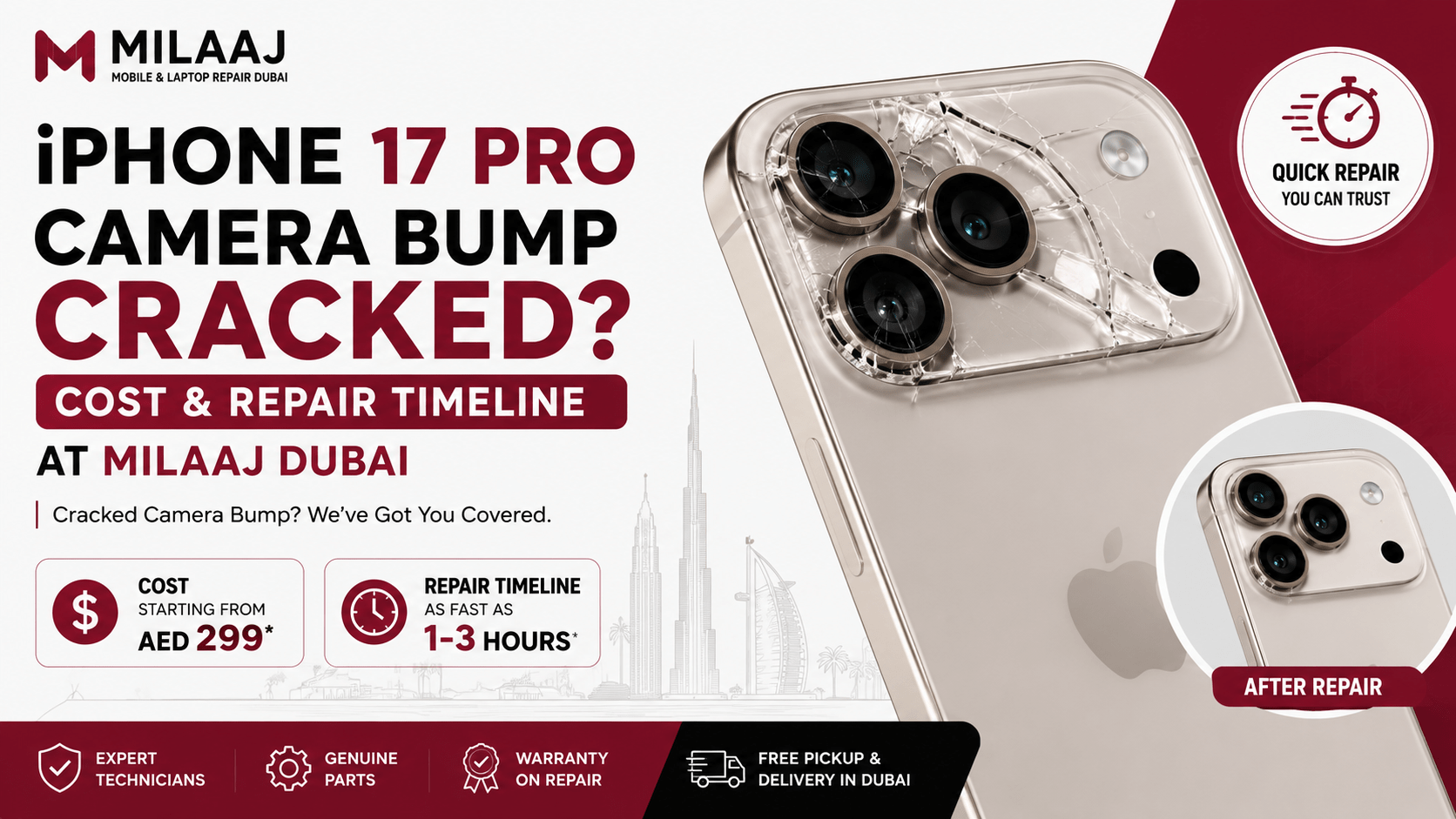
We all love the stunning, cinematic photos captured by today’s smartphones. Thanks to advanced triple-camera systems, flagship devices can turn everyday moments into professional-looking images. However, those large camera lenses come with one important drawback. They extend from the back of the phone, making them more vulnerable to accidental damage.
As a result, a single drop onto concrete, tile, or another hard surface can crack the protective camera glass. If this happens, finding information about the iPhone 17 Pro camera bump cracked cost and repair timeline at Milaaj Dubai quickly becomes a priority.
A cracked camera bump is more than a cosmetic problem. In fact, damaged camera glass can allow fine dust, dirt, and moisture to enter the camera module. Consequently, these contaminants may affect the optical image stabilization system and the camera sensors. Over time, the damage can become much more serious.
Therefore, repairing the cracked camera glass as soon as possible is the best way to prevent additional repair costs. In this guide, you’ll learn what causes camera bump damage, the expected repair cost in Dubai for 2026, and the typical repair timeline. You’ll also discover how professional technicians restore your iPhone safely and efficiently.
Why the Camera Bump Design Makes Flagship Phones Vulnerable
To understand why the camera module area breaks so easily, we need to take a look at modern smartphone architecture. Smartphone companies keep pushing the boundaries of mobile photography by using larger image sensors and complex multi-layered lenses.
The Physical Impact Zone
Modern smartphone cameras need extra space to deliver advanced zoom and high-quality photography. As a result, the camera module extends beyond the rear glass panel. Although this design improves image quality, it also makes the camera bump more vulnerable to damage.
When your phone slips from your hand, it rarely lands flat. Instead, the heavier top section often hits the ground first. Consequently, the raised camera housing absorbs most of the impact. Even a relatively short fall onto concrete or tile can crack the protective camera glass.
Structural Stress Around the Camera Module
Modern smartphones use a single sheet of chemically strengthened glass for the rear panel. In addition, manufacturers mold the raised camera bump directly into this panel. As a result, the phone has a sleek appearance and maintains excellent water resistance.
However, this design also creates natural stress points around the camera rings. If the edge of the camera bump takes a direct hit, cracks can spread across the rear glass. Therefore, what begins as a small chip may quickly become a larger crack if left unrepaired.
How Dubai’s Climate Can Increase the Risk
Dubai’s climate can also affect your smartphone over time. During the summer, outdoor temperatures often exceed 46°C. As a result, prolonged heat can weaken the adhesive that secures the camera module.
Furthermore, many people move quickly between the hot outdoor environment and heavily air-conditioned buildings. This rapid temperature change causes different materials inside the phone to expand and contract at different rates. Over time, this repeated movement places additional stress on the rear glass and camera housing. Consequently, the camera bump may become more vulnerable to cracks from even minor drops or impacts.
Quick Troubleshooting: Assessing the True Extent of the Damage
Before you panic over repair costs, you should figure out exactly which part of the rear camera system is broken. This simple inspection helps you understand whether you need a quick external glass replacement or a deeper internal hardware swap.
<Sequence>
{/* Reason: Procedural diagnostic checklist where order is critical to isolate physical lens glass damage from active internal hardware sensor failure. */}
  <Step title="Clean the Entire Camera Housing" subtitle="Takes 30 seconds">
    Use a clean, dry microfiber cloth to wipe down the lenses. Remove all surface smudges, fingerprints, and loose glass dust so you can clearly see the underlying fractures.
  </Step>
  <Step title="Test the Digital Focus Functionality" subtitle="Takes 1 minute">
    Open the default iOS camera application and point it at an object nearby, then quickly switch to a distant landmark. Watch closely to see if the Autofocus mechanism moves smoothly or if it jitters and makes a faint clicking sound.
  </Step>
  <Step title="Cycle Through Every Individual Lens" subtitle="Takes 1 minute">
    Manually switch between the 0.5x Ultra-Wide, 1x Main, and 5x Telephoto zoom modes. Check if the black cracks disappear on certain zoom levels, which tells you that only one specific lens cover is broken.
  </Step>
  <Step title="Inspect the Live Feed for Dark Spots" subtitle="Takes 1 minute">
    Point the camera at a clean, solid white wall or a sheet of paper. Look closely for tiny purple dots, blurry grey spots, or dark streaks on your screen, which indicate that hard dust particles have already scratched the actual digital sensor.
  </Step>
</Sequence>
The Hidden Dangers of Delaying Camera Glass Repairs
Many users try to ignore a minor crack along the edge of the camera bump, especially if their daily photos still look relatively sharp. However, using a device with a fractured protective shield is a massive risk for the high-end electronics inside.
- Microscopic Glass Dust Scratches: Every time you slide your phone into a tight pocket, the broken glass fragments rub together. This friction creates a fine, abrasive glass powder that falls directly into the lens assembly. This dust will permanently scratch the delicate antireflective coatings on the internal lenses.
- Total Failure of the Focus System: The voice coil motors that manage optical image stabilization operate inside a fragile magnetic field. If fine desert dust particles get trapped inside those motors, the physical lenses will jam. This completely disables the autofocus feature and leaves you with permanently blurry videos.
- Complete Loss of Water Protection: The camera housing is a major barrier against moisture. A single hairline crack allows high coastal humidity and sweat to seep straight into the core of the phone, leading to sudden short circuits on the logic board.
Cost and Timeline Breakdown for Dubai Repairs
The total price and the time you will spend waiting to get your phone fixed depend entirely on whether the damage is purely cosmetic or if the internal hardware sensors are broken.
Cosmetic External Lens Replacement
If the internal camera sensors take clear photos and the damage is limited to the circular glass covers, technicians can perform a targeted outer glass swap. This precision repair completely removes the shattered glass fragments and seals a premium new cover onto the existing housing.
- Average Cost in Dubai: AED 180 to AED 280 per individual lens cover.
- Standard Repair Timeline: 45 to 90 minutes.
Complete Rear Integrated Glass Panel Replacement
When the crack spreads across the raised square base of the camera bump, you cannot simply swap an isolated glass ring. Technicians must replace the entire rear glass panel assembly to ensure structural integrity and restore the phone’s original strength.
- Average Cost in Dubai: AED 390 to AED 550.
- Standard Repair Timeline: 2 to 3 hours.
Deep Triple-Sensor Module Replacement
If a hard impact destroys the internal stabilization hardware or shatters the primary digital sensor, an external glass repair will not fix the problem. Technicians must perform a full teardown to swap out the entire internal triple-camera hardware module.
- Average Cost in Dubai: AED 650 to AED 890.
- Standard Repair Timeline: 1 to 2 business days (depending on specialized part availability).
Professional Mobile Restoration at Milaaj Mobile and Laptop Repair Al Barsha
Handling advanced smartphone hardware requires exceptional technical skill and specialized equipment. For residents searching for a fast, dependable, and stress-free fix, Milaaj mobile and laptop repair Al Barsha offers precision hardware solutions tailored specifically for high-end flagship devices.
Highly Competitive Low Pricing Structures
Fixing a premium smartphone should not force you to pay astronomical service fees. By working directly with elite international component suppliers and using advanced, automated tools in-house, specialized service centers keep their overhead low. This allows them to pass massive savings directly to you, providing elite hardware restorations at highly competitive low prices.
Lightning-Fast Repair Speeds and Convenience
Living in a busy city means you cannot afford to wait days for a basic hardware fix. The specialized technicians at our Al Barsha service center keep a robust inventory of premium parts on hand. This enables them to complete standard camera glass replacements in just a couple of hours, allowing you to drop off your device and pick it up fully restored on the very same day.
Premium Grade Component Quality
Using cheap, low-grade replacement glass can completely ruin your smartphone’s photographic performance. Low-quality glass causes distracting lens flares, distorts colors, and ruins your night mode shots. A professional repair uses only premium-grade replacement glass that matches factory optical specifications perfectly. This ensures your high-speed zoom and lidar systems function exactly like they did the day you first unboxed your phone.
Frequently Asked Questions (FAQ)
Will a software update fix a camera application that shows a black screen after a drop?
If the camera application displays a completely black screen immediately after a hard fall, the problem is almost certainly caused by physical hardware damage. The impact likely unplugged the internal ribbon flex cable from the main logic board or permanently broke the power lines inside the image sensor.
Can I use a stick-on plastic camera lens protector to hold shattered glass together?
Using a stick-on plastic protector over cracked glass is highly risky. The adhesive layer on the protector will apply downward pressure on the loose shards, which can push sharp glass fragments deeper into the internal lenses and permanently ruin the expensive digital sensors underneath.
Why does my phone camera shake and make a buzzing noise when I open the app?
A shaking view and a faint buzzing sound mean that the physical impact has permanently damaged the optical image stabilization motors. The internal magnets are trying to balance a jammed lens mechanism, which causes the sensor to vibrate violently and makes it impossible to capture steady videos.
Does the technician need to open up the entire phone to replace a single lens glass?
Experienced technicians can often replace a single, outer circular lens cover from the outside using high-precision heat induction pens and specialized micro-tweezers. However, if the main raised square camera bump is cracked, they must perform a full teardown to safely remove the rear panel without damaging the internal battery.
How can I protect my phone’s large camera bump from future drop damage?
The most effective way to protect your camera area is to use a premium protective case that features a prominent, raised protective lip around the camera square. Additionally, look for cases that include an integrated, snap-close metal lens cover to shield the glass from direct point impacts when you are outdoors.
If your phone’s rear camera lens is cracked or showing blurry spots, you can watch this step-by-step tutorial on How to Replace Broken Smartphone Camera Glass Safely to see the meticulous care required for this repair. This video walk-through is highly useful because it demonstrates the exact tools and heat management techniques technicians use to clear away broken shards without damaging the delicate, exposed digital image sensors underneath.


Leave a Reply